
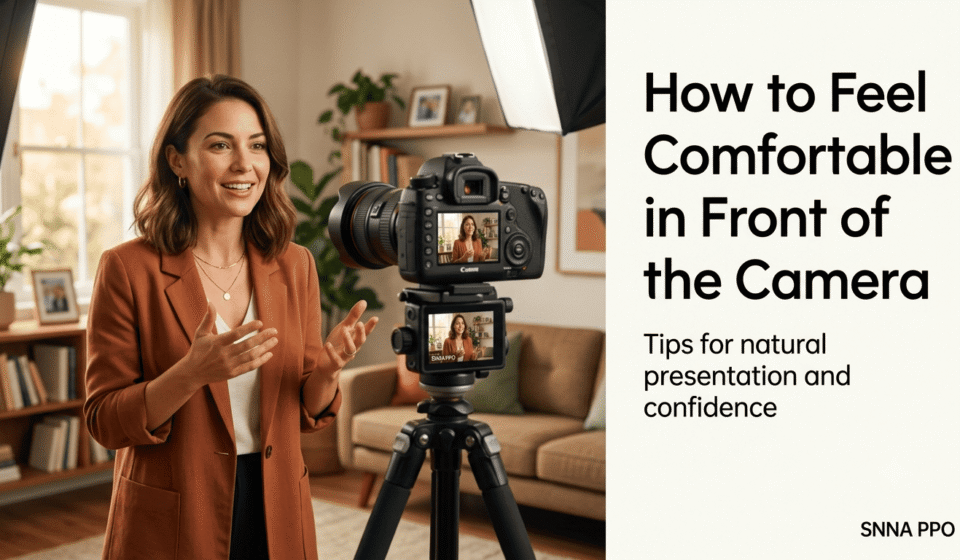

You hit record. You see your own face on the screen. Your voice sounds weird. Your hands do not know what to do. Then you stop, delete the video, and tell yourself you will try again later.
If this sounds familiar, you are not doing anything wrong. Most people feel awkward on camera at first. Camera confidence is a skill. Skills grow with practice, not with willpower alone.
This guide walks through why camera discomfort happens and gives specific steps to feel more natural on video, whether you are recording a work presentation, a social media clip, a job interview, or a simple video call with family.
Why Do You Feel Awkward on Camera?
A few things happen at once when a camera turns on. Your brain suddenly treats you as both the speaker and the audience. You start narrating yourself instead of just talking. That split attention creates tension in your body and your voice.
This reaction is not a personality flaw. It is a predictable response to an unfamiliar situation. Most people spend very little time watching themselves talk in real time, so the brain treats a camera lens as something to monitor rather than something to simply speak toward.
Several common causes show up again and again.
- Seeing your own face while talking feels unfamiliar and distracting
- Fear of judgment from people who might watch the video later
- Pressure to sound polished instead of natural
- Little or no practice speaking without a live back and forth
- Silence after you stop talking, since a camera does not nod or laugh like a real person does
- Worry about permanence, since a recorded video can be watched again and again
None of these causes mean something is broken. They just mean the brain needs more repetition with this specific situation. The discomfort usually fades with exposure, the same way any new skill feels strange before it feels normal.
How to Feel More Comfortable on Camera
Camera confidence builds through small, repeatable actions. Each tip below focuses on one specific habit you can start using today. None of these require special equipment or professional training.
Prepare the Key Points Instead of a Script
Write down three or four key points before you record. Skip full sentences. A list of short phrases keeps your delivery natural instead of robotic.
Reading a script word for word often makes people sound stiff and forces their eyes off the camera. A simple outline lets you speak the way you already talk in everyday conversation.
Try writing your points on a sticky note or index card placed near the camera. Glance at it briefly if needed, then return your eyes to the lens. This keeps you anchored without locking your gaze onto text.
Start With Short Recordings
Record thirty to sixty seconds at first. Short clips lower the pressure and give you quick feedback without hours of footage to review afterward.
As short recordings start feeling normal, stretch the length gradually. Confidence grows faster in small steps than in one long attempt at a five minute video.
Many people skip this step and try to record a long, polished video on their very first attempt. That approach usually backfires and leads to frustration. Short, frequent practice builds comfort much faster than occasional long sessions.
Look at the Camera Lens, Not the Screen
Eye contact with a camera lens creates a sense of connection for the viewer. Looking at your own face on the screen instead breaks that connection and can make you look distracted or unsure.
Put a small sticker or dot next to the lens if that helps you remember where to look. Some people find it useful to imagine a friend standing directly behind the camera and speak to that imagined person.
This habit takes conscious effort at first. Over time, looking at the lens becomes automatic, the same way looking at someone’s eyes during a normal conversation becomes automatic.
Relax Your Body Before You Hit Record
Tension in your shoulders and jaw comes through on camera, even when you cannot fully see it yourself. Take a few slow breaths before you start. Roll your shoulders back. Unclench your jaw and let your hands rest naturally.
A relaxed body signals calm to the viewer, even if your thoughts are racing underneath. Viewers pick up on body language quickly, often before they register what you actually say.
A quick physical reset before recording, even just ten seconds of stretching or breathing, can change your entire delivery for the better.
Slow Down Your Speech
Nervous speech tends to speed up without warning. Faster speech often skips natural pauses and makes sentences run together, which can confuse the listener and make you sound rushed.
Pause briefly between main points. A short pause feels much longer to the speaker than it does to the viewer. Most people underestimate how natural a pause looks on video.
Practice counting a silent beat after finishing a sentence before moving to the next one. This small habit gives your speech room to breathe and gives the viewer time to absorb what you said.
Let Your Face Move Naturally
Forced smiles look tense and stiff. Natural expressions match the content of what you are saying and shift as your tone shifts.
Think about the emotion behind each point as you speak it. Genuine reactions read as far more trustworthy than a fixed smile held the entire time. If a point is serious, let your face reflect that. If a point is lighthearted, let a real smile show through.
Record More Than One Take
Give yourself permission to record the same thing two or three times. Each take usually feels a little smoother than the last one, since your body and voice have already warmed up.
Pick the best parts from different takes rather than expecting one perfect run all the way through. Professional speakers rarely nail a recording on the first attempt, and there is no reason to expect that from yourself either.
Watch Your Videos Without Tearing Yourself Apart
Review your recording once through without pausing or judging every second. Then watch it again and pick one specific thing to improve next time.
Trying to fix everything at once leads to frustration and often stops people from recording again. Choose one focus area, such as pacing or eye contact, and work on that single element before adding another.
Talk to One Person, Not an Audience
Picture one specific person behind the camera, like a coworker, a friend, or a family member. Speak directly to that one person instead of imagining a crowd watching and judging every word.
This mental shift makes tone and word choice sound conversational instead of performative. It also reduces the pressure that comes from imagining a large, faceless audience.
Set Up Your Space to Reduce Distractions
A cluttered or unfamiliar recording space can add unnecessary stress on top of camera nerves. Choose a quiet spot with decent lighting and minimal background noise before you start.
Good lighting helps you see your own expressions clearly during playback, which makes the review process easier and less discouraging. Natural light from a window facing you works well for most beginners.
How to Look Natural on Camera
Looking natural comes down to a few physical habits working together consistently.
Posture matters first. Sit or stand up straight without stiffening your body. Keep your shoulders relaxed and your chin level, not tilted down toward a phone or laptop camera. A slightly upward camera angle often looks more natural than a downward one.
Hand gestures should match your normal speaking style. Most people already gesture while talking to friends. Camera nerves often suppress this instinct and create stiff, flat delivery instead. Let your hands move the way they normally would in conversation.
Voice and tone carry a lot of the natural feeling too. Vary your pace and pitch the same way you would in a normal conversation. A flat, monotone voice reads as scripted even when the words themselves sound fine. Emphasize key words the way you naturally would when telling a friend something important.
Small imperfections also help. A brief pause, a natural laugh, or a slight stumble followed by a smooth recovery all make a video feel human instead of overly produced. Viewers generally connect more with authentic moments than with perfectly polished delivery.
How to Build Camera Confidence Over Time
Camera confidence grows through a clear pattern: understand, prepare, practice, record, review, and improve.
Start by understanding that discomfort is normal and temporary. Prepare a simple outline before each recording. Practice speaking your points out loud a few times before the camera turns on, either alone or in front of a mirror.
Record short, low pressure clips on a regular basis, even once or twice a week. Review each one and choose a single improvement to focus on next time. Repeat this cycle consistently over several weeks.
Confidence rarely arrives through one big breakthrough. It builds through repeated, low stakes practice over weeks and months. Many people notice a real shift after a month of consistent short recordings, even without any formal training.
Keeping a simple log of your recordings can help you track progress. Note the date, the length, and one thing that felt better than the last attempt. Looking back at earlier recordings after a few weeks often shows clear improvement that is hard to notice day to day.
Common Camera Mistakes That Make You Look Nervous
A few habits tend to show up together and make videos feel less confident than the speaker actually is.
- Reading a script word for word instead of speaking from an outline
- Staring at your own image on the screen instead of the lens
- Rushing through sentences without any pauses
- Holding a fixed smile through the entire recording
- Recording only one take and settling for it regardless of quality
- Rewatching a video and focusing only on flaws instead of strengths
- Sitting too far from the camera, which can make body language harder to read
- Ignoring lighting, which can make expressions harder to see clearly
Fixing even one or two of these habits often makes a noticeable difference in how natural a video feels. Small, targeted changes tend to produce better results than trying to overhaul everything at once.
Frequently Asked Questions
How can I stop being nervous in front of the camera?
Preparation and repetition reduce nervousness more effectively than trying to think your way out of it. Practice speaking your main points out loud, record short low pressure clips, and repeat the process regularly instead of waiting to feel ready.
Why do I feel awkward when I see myself on video?
Most people rarely see their own face while talking in real time. Video removes that gap and creates a split focus between speaking and watching yourself. This feeling fades with regular exposure to seeing yourself on screen.
How long does it take to become comfortable on camera?
Timelines vary by person, but many people notice real improvement after several weeks of short, consistent practice sessions. Comfort grows through frequency of practice rather than a specific number of days or a single long session.
How can I look more natural in videos?
Natural delivery comes from relaxed posture, steady pacing, and genuine facial expressions that match what you are saying. Speaking to one imagined person instead of a general audience also helps keep tone conversational.
Where should I look when talking to a camera?
Look directly at the camera lens rather than the screen or your own image. This creates a sense of eye contact for the viewer and keeps attention focused on your message.
Should I memorize my script before recording?
A short outline of key points usually works better than a memorized script. Outlines allow natural pacing and word choice, while memorized scripts often lead to stiff, robotic delivery.
Does lighting really affect how comfortable I feel on camera?
Good lighting makes your expressions easier to see, which can make playback less discouraging and help you notice genuine progress. Poor lighting can also cause unnecessary self-consciousness during recording, so a well lit space supports overall comfort.
Does camera confidence ever feel completely automatic?
Full comfort takes time, and some nervousness may show up occasionally even with practice. The realistic goal is reaching a point where nervousness no longer controls your pacing, eye contact, or delivery.