
You just found out a little new member is moving in, and somewhere between picking a crib and packing a hospital bag, a new thought creeps in: Is my house actually clean enough for a baby? Do I need to prepare my home for a newborn? What baby-proof cleaning routine should I follow?
Suddenly you’re staring at your kitchen counter wondering if it would hurt your child. You’re Googling things like “is my couch toxic” at 1am. You’re side-eyeing the dog.
Take a breath. You’re not being dramatic. This is completely normal.
Almost every new parent goes through this exact moment. Your home feels different the second you know a baby is coming home to it. That’s not anxiety talking. That’s instinct doing its job.
The good news? You do not need to turn your house into a hospital room. You do not need to bleach your walls. You just need to know what actually matters and what you can let go of.
This guide walks you through how to clean your home safely before you welcome a newborn.
Why Cleaning Matters More After Bringing Home a Baby
Here’s the honest truth about newborns. A newborn’s immune system is still developing and learning how to respond to the world around them. It hasn’t met the world yet. It hasn’t built up defenses the way yours has over the last 20, 30, or 40 years.
That means things your body shrugs off without a second thought, like everyday germs on a doorknob, can hit a newborn harder. Their little bodies are still learning how to fight things off.
So yes, a clean home helps. It cuts down the amount of bacteria, dust, and irritants your baby is exposed to in those early fragile weeks.
But here’s the part most people get wrong: clean does not mean sterile.
You do not need to disinfect every surface every single day. In fact, going overboard can backfire. A completely sterile environment is neither practical nor necessary. Normal exposure to everyday environments helps the immune system develop, while good hygiene practices reduce your baby’s exposure to harmful germs.
The goal is simple: reduce the real risks and skip the unnecessary stress.
How Health Experts Are Helping Parents Make Better Cleaning Decisions
You are not the only one who has been thinking hard about this lately. Health and cleaning experts have been paying attention too.
In May 2026, the American Cleaning Institute (ACI) partnered with the American Academy of Family Physicians (AAFP) to launch a new cleaning resource hub specifically for new families. It lives right on FamilyDoctor.org, the AAFP’s own patient education website.
The goal behind it is to give new parents clear, trustworthy, easy-to-follow guidance on cleaning and disinfecting during those early, overwhelming weeks with a newborn. No guesswork, no scare tactics, just practical information from people who actually study this stuff for a living.
It’s a good sign that this topic is finally getting the attention it deserves. New parents have been quietly stressing over this for years, and it’s reassuring to see medical and cleaning experts team up to make it easier.
You can check out the full cleaning resource hub if you want more expert-backed guidance beyond what’s covered in this guide. Now, let’s take a look at a first-time parent cleaning checklist.
What Areas Should New Parents Clean Before a Baby Arrives?
Think of this as your pre-baby cleaning checklist. You don’t have to do it all in one weekend. Just work through it a little at a time before your due date.
The Nursery
This is baby’s home base, so start here.
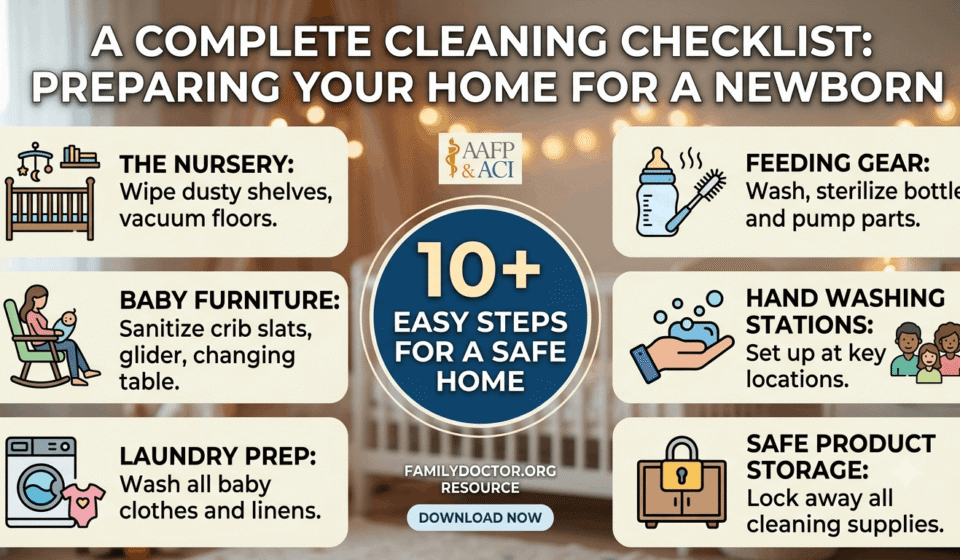
Wipe down shelves, windowsills, and any surface that collects dust. Wash curtains or blinds if they’ve been up a while. Vacuum the floor and, if there’s carpet, give it a deep clean if you can.
Dust is the real enemy in a nursery. It builds up in corners and vents without you noticing, and newborns breathe it in more than you’d think since their crib is usually low to the ground.
Baby Furniture
Crib, changing table, dresser, glider chair. Wipe all of it down before use, especially if any of it is secondhand or has been sitting in storage.
Pay extra attention to crib slats and corners. Babies eventually put everything in their mouths, so smooth, wipeable surfaces matter here.
Bottles and Feeding Equipment
This one is a big deal. Feeding equipment touches your baby’s mouth multiple times a day, so it needs proper cleaning every single time.
Wash bottles, nipples, and pump parts in hot soapy water after each use. Sterilizing them before first use, and every so often afterward, is a smart move too.
If you want a full step-by-step on this, you can find a guide on how to clean baby bottles on the patient website of the American Academy of Family Physicians.
Floors and Carpets
Babies spend a significant amount of time on the floor. Tummy time, crawling, rolling around on a blanket. All of it happens down there.
Vacuum regularly. Mop hard floors with a mild cleaner. If you have pets, this step matters even more since pet hair and dander collect fast.
Bathrooms
Your baby’s bath space needs to be clean, but you don’t need harsh chemicals here either. A simple, gentle cleaner works fine for the tub and surrounding area.
If you’re prepping for actual bath time, this newborn bathing guide is worth bookmarking. It covers water temperature, frequency, and what soaps are actually safe for newborn skin.
Frequently Touched Surfaces
Doorknobs. Light switches. Remote controls. Phone screens. Your steering wheel, honestly.
These are the surfaces hands touch again and again all day long. Wipe these down more often than you’d think to, especially during cold and flu season or if anyone in the house has been sick.
When Should You Deep Clean Before Baby Arrives?
Timing makes this whole thing way less stressful. You don’t need to do everything at once, and you definitely don’t need to finish it all in one exhausted, nine-month-pregnant weekend.
Here’s a simple way to spread it out.
2 to 4 Weeks Before Your Due Date
This is your window for the bigger jobs, the ones that take more time or more energy.
- Start with the nursery. Dust the shelves, wipe down windowsills, and vacuum or deep clean the carpet if you have any.
- Move on to furniture. Wipe down the crib, changing table, and dresser, especially if any of it is secondhand or has been sitting in storage.
- Get your laundry done early. Wash all the baby clothes, blankets, and crib sheets so they’re ready to go, no last-minute scrambling.
- Lastly, pull together your supplies. Diapers, wipes, bottles, and anything else you’ll need close at hand once your baby is actually here.
Doing this early means you’re not trying to deep clean a nursery while also being nine months pregnant and exhausted.
The Final Week
Save the smaller, faster tasks for this stretch. Your energy is limited, and honestly, so is your time.
- Focus on frequently touched surfaces like doorknobs, light switches, and remote controls.
- Give the bathroom a quick refresh, especially the tub area if you’re planning early sponge baths.
- Do a light pass on the kitchen, particularly if you’ll be washing bottles there.
Think of the final week as touch-ups, not a full deep clean. The heavy lifting is already done.
What Cleaning Tasks Can Wait Until After Baby Arrives?
Now for the part that might actually relieve some pressure. Not everything needs to happen before your due date. In fact, trying to do it all beforehand is a fast track to burnout, and you’re going to need that energy for, well, the baby.
Here’s what cleaning tasks can wait until after your baby’s arrival:
- Organizing every drawer. Your junk drawer does not care that a baby is coming. It can stay messy for a few more months.
- Repainting rooms. Unless it’s the nursery and you’re doing it early for fumes to clear out, painting can wait. This is not the season for home improvement projects.
- Deep cleaning unused areas. Such as the guest room closet, garage, attic. If your baby isn’t going in there, it doesn’t need to be spotless right now.
- Making the entire house perfect. Your home does not need to be magazine-ready before your baby comes home. It needs to be safe and functional. That’s it.
Give yourself permission to let some things slide. A messy junk drawer has never once hurt a newborn. Your energy is better spent resting, bonding with your baby, and getting through those first exhausting weeks. Perfect can wait. Safe cannot.
How to Choose Baby-Safe Cleaning Products
Not all cleaning products are created equal, and this is where a lot of new parents get overwhelmed standing in the cleaning aisle.
Here’s how to ensure you are using safe cleaning products for babies.
Read the Label on Cleaning Products
Every cleaning product has usage instructions for a reason. Look for anything marked safe for use around children or infants, and check for warnings about ventilation or contact time.
Follow the Cleaning Instructions Exactly as Written
More product does not mean cleaner. Using extra amounts of a cleaning product does not make it work faster or better. It just increases the amount of residue and fumes left behind.
Never Mix Cleaning Chemicals
This one is non-negotiable. Mixing bleach with ammonia or other cleaners can create toxic fumes that are dangerous for anyone in the house, not just your baby. Stick to one product at a time.
Store All Cleaning Products Out of Reach
Once your baby starts crawling, cabinets become fair game. Store all cleaning products in a locked cabinet or somewhere high up, ideally with a childproof latch. Start this habit early so it’s already in place by the time your baby is mobile.
Ventilate the Room While Cleaning
Open a window or turn on a fan whenever you’re cleaning with any kind of spray or strong-smelling product. Let the room air out before bringing your baby back into it.
For a deeper dive on picking the right products room by room, this guide to cleaning your home is a solid resource written specifically with new parents in mind.
Cleaning vs. Disinfecting: What Is the Difference?
This trips up a lot of people, so let’s clear it up.
Cleaning
Cleaning removes dirt, dust, crumbs, and some germs from a surface. It is usually done with soap, water, and a rag. It physically lifts stuff off the surface, even if it doesn’t kill every single germ.
Disinfecting
Disinfecting is a different job entirely. It uses specific chemical products designed to kill germs and bacteria that are left on a surface, usually after it’s already been cleaned.
Here’s the part that surprises people: you do not need to disinfect everything, every day.
Disinfecting is really only necessary for high-touch surfaces, or after someone in the house has been sick. Your kitchen counter, doorknobs, and bathroom surfaces are good candidates. Your baby’s dresser or nursery bookshelf? Regular cleaning is usually enough.
Using disinfectant everywhere, all the time, isn’t just unnecessary. It can leave behind chemical residue and unwanted fumes in spaces where your baby spends a lot of time.
A simple rule of thumb: Clean often and disinfect when it actually matters.
Common Cleaning Mistakes New Parents Should Avoid
Even parents who have good intentions and are trying their best sometimes make a few common mistakes. Here’s what to watch for:
- Using too much disinfectant. More is not safer. It’s just more chemical exposure for everyone in the house, including you.
- Skipping the instructions. Contact time matters. A lot of disinfectants need to sit wet on a surface for several minutes to actually work. Wiping it off too fast means it didn’t do its job anyway.
- Mixing bleach with other cleaners. This bears repeating because it’s genuinely dangerous. Never combine bleach with ammonia-based products or other cleaners. The fumes created can seriously harm your lungs.
- Leaving products within reach. It’s easy to set a spray bottle down on the counter “just for a second.” That second turns into an hour, and a crawling baby moves fast. Put it away every single time, even if you’re coming right back to it. Here is a helpful safe storage guide that covers how to babyproof your cabinets and storage spaces.
- Using strong fragrances around your baby. Heavily scented sprays, plug-ins, and candles can bother a newborn’s sensitive nose and lungs. Fragrance-free or lightly scented products are the gentler choice for the first several months.
A Few More Things Worth Knowing
Laundry Matters More Than You’d Think
Many parents choose to wash baby clothes separately, especially during the early months. Using a gentle, fragrance-free detergent and following care instructions can help protect sensitive skin. This baby laundry guide breaks down exactly what to use and how often to wash.
Diaper Changes Need Their Own Clean Routine
Keep your changing area stocked and wipe it down regularly. This step-by-step diaper changing guide is a useful resource to bookmark, especially for tired 3 a.m. changes when your brain isn’t fully online yet.
The Bottom Line
A clean home does not mean a completely germ-free home. That’s not the goal, and honestly, it’s not even possible.
What actually matters is building simple, consistent habits. Wipe down the surfaces that get touched the most. Keep feeding equipment properly washed. Store your cleaning products safely out of reach. Know when to just clean, and when to actually disinfect.
That’s it. That’s the whole system.
You don’t need a spotless house to be a good parent. You need a safe one, and a safe one is already well within reach.
Take it one room at a time. You’ve got this.
Frequently Asked Questions
Do I Need to Disinfect My Whole House Before My Baby Comes Home?
No, you don’t need to disinfect the whole house before welcoming your newborn. A full deep clean is enough for most of your home. Save disinfecting for high-touch spots like doorknobs, light switches, and bathroom surfaces. Disinfecting every single surface in your house isn’t necessary and can leave behind chemical residue your baby doesn’t need to be around.
Is It Safe to Use Regular Cleaning Products Around a Newborn?
Most regular cleaning products are safe as long as you read the label, follow the instructions, and let the room air out before your baby comes back into it. Fragrance-free cleaning products or gentle cleaning formulas are the safer pick for nurseries and anywhere your baby spends a lot of time.
How Often Should I Clean Baby Bottles and Feeding Equipment?
Wash bottles, nipples, and pump parts in hot soapy water after every single use. It’s also smart to sterilize them before you use them for the first time, and every so often after that, especially in the first few months.
What Is the Difference Between Cleaning and Disinfecting?
Cleaning removes dirt, dust, and some germs using soap and water. Disinfecting uses a specific product to actually kill germs left on a surface. You clean most things regularly, but you only need to disinfect certain high-touch spots or after someone in the house has been sick.
Can Too Much Cleaning Actually Be Bad for My Baby?
Yes, believe it or not. Over-disinfecting can lead to unnecessary chemical exposure and is not needed for maintaining a healthy home environment for babies. The goal is a clean, safe home, not a completely sterile one.
What Household Surfaces Should I Clean Most Often With a Newborn at Home?
Focus on doorknobs, light switches, remote controls, phone screens, the changing table, and any surface your baby’s hands or mouth will touch. These get handled constantly, so they build up germs faster than the rest of the house.
Is It Okay to Use Secondhand Baby Furniture Like a Crib or Dresser?
Yes, you can use secondhand baby furniture as long as you clean and wipe it down thoroughly before use, especially if it’s been sitting in storage or came from another home. Pay close attention to crib slats and corners since babies eventually put everything in their mouths.
How Do I Keep Cleaning Products Safe Once My Baby Starts Crawling?
Store all cleaning products in a locked cabinet or somewhere high up and out of reach of your baby, ideally with a childproof latch. It’s best to start this habit early, before your baby is mobile, so it’s already second nature by the time they start exploring.
Do I Need Special Cleaning Products Just for the Nursery?
Not necessarily. A mild, fragrance-free cleaner works fine for most nursery surfaces. What matters more is consistency, wiping down dust-prone spots like shelves and windowsills regularly, since dust builds up fast in a low-to-the-ground crib environment.
Can I Mix Bleach With Other Cleaning Products to Clean Faster?
No, never do this. Mixing bleach with ammonia or other cleaners can create toxic fumes that are dangerous to breathe in, especially in a house with a newborn. Always use one product at a time and follow the label instructions.
Note: The cleaning and health guidance in this article is based on resources from the American Cleaning Institute and the American Academy of Family Physicians.
Sources